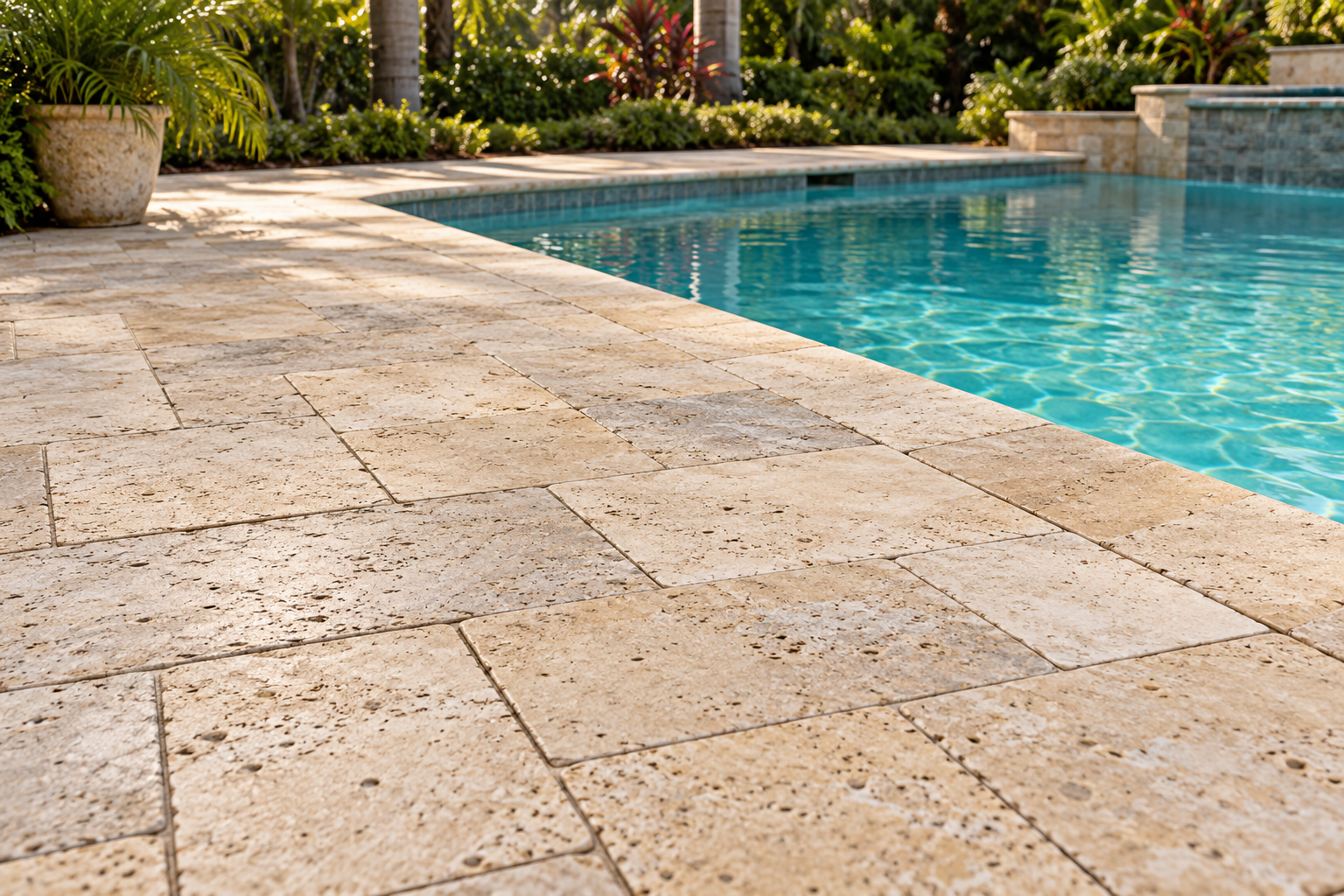
If your travertine pool deck looks darker, patchier, or more worn than it used to, the next step depends on what has changed. Dirt, staining, deteriorated joints, and loose stone can call for different work. Before booking a cleaning or buying another sealer, take a closer look at the areas that concern you.
For homeowners around Mobile, Fairhope, Gulf Shores, and the Gulf Coast, a useful assessment starts with three questions: What needs to be removed? What needs protection? And does anything need repair before the surface is treated?
When cleaning may be the right starting point
Tell us where the discoloration appears. Is it under furniture, beside landscaping, along the pool edge, or across the main walking area? Does it remain after the stone dries? Photos of both the overall deck and individual marks help guide the inspection.
Travertine needs stone-appropriate care. Avoid vinegar and acid-based cleaners that can etch acid-sensitive stone. A neutral cleaner labeled for natural stone is a sensible routine starting point, used at its recommended dilution. The Natural Stone Institute's care guidance explains why matching the cleaner to the stone matters.
Professional cleaning can address accumulated soil and suitable surface buildup. Persistent stains or changes to the stone's finish may need separate treatment. At Cornerstone, we review the surface and previous treatments before recommending the cleaning method. Let us know if someone has already used a strong chemical or applied a coating.
What sealing can help with
A suitable penetrating sealer can improve stain resistance. It cannot make stone stain-proof or replace cleaning and repairs. Sealer selection should account for the stone, existing treatment, exterior exposure, and the manufacturer's instructions.
Ask whether the proposed treatment will retain the current appearance or change it. Also ask about drying conditions and when the deck can be used again. An application schedule should follow the selected product's requirements rather than a promise that every deck can be cleaned and sealed in one visit.
For example, LATICRETE's exterior sealer instructions require a clean, thoroughly dry surface and a test area. Those directions illustrate why preparation and product compatibility matter; the appropriate product for your deck must be determined separately.
When repairs need attention first
Point out anything that moves, catches a bare foot, or has noticeably changed. Important details include:
- Loose or rocking stones.
- Cracked pieces or damaged edges.
- New or enlarged holes in the stone.
- Missing joint material or joints that keep opening.
- Areas where water collects or drainage has changed.
Travertine can contain natural voids, so every hole does not mean the same thing. The Natural Stone Institute's guidance on travertine voids discusses this characteristic. The condition, location, and intended finish help determine whether filling or another repair is appropriate.
Cleaning and sealing will not stabilize a moving paver or correct drainage. Those concerns need their own assessment and may require an installer or another qualified trade. We can discuss which surface-care work fits the project and what needs to be resolved first.
What to send when requesting an estimate
A few useful details make the conversation more productive:
- Your location and approximate deck size.
- A wide photo of the pool area and close-ups of the concerns.
- Any previous sealer or cleaner names, if known.
- Whether the concern is appearance, staining, joints, or damaged stone.
- Any planned pool work or date you need the area available.
Compare estimates by the work included: cleaning, specific stain treatment, joint work, repairs, and sealing should be clearly described where applicable. Ask what results are realistic for the existing condition.
Travertine pool deck care on the Gulf Coast
Cornerstone Hard Surface Restoration helps homeowners evaluate natural stone cleaning and restoration. If your pool deck needs attention, call (251) 232-2195 or email info@cornerstonehsr.com with photos and a short description. We'll discuss the concerns and help identify an appropriate next step.