

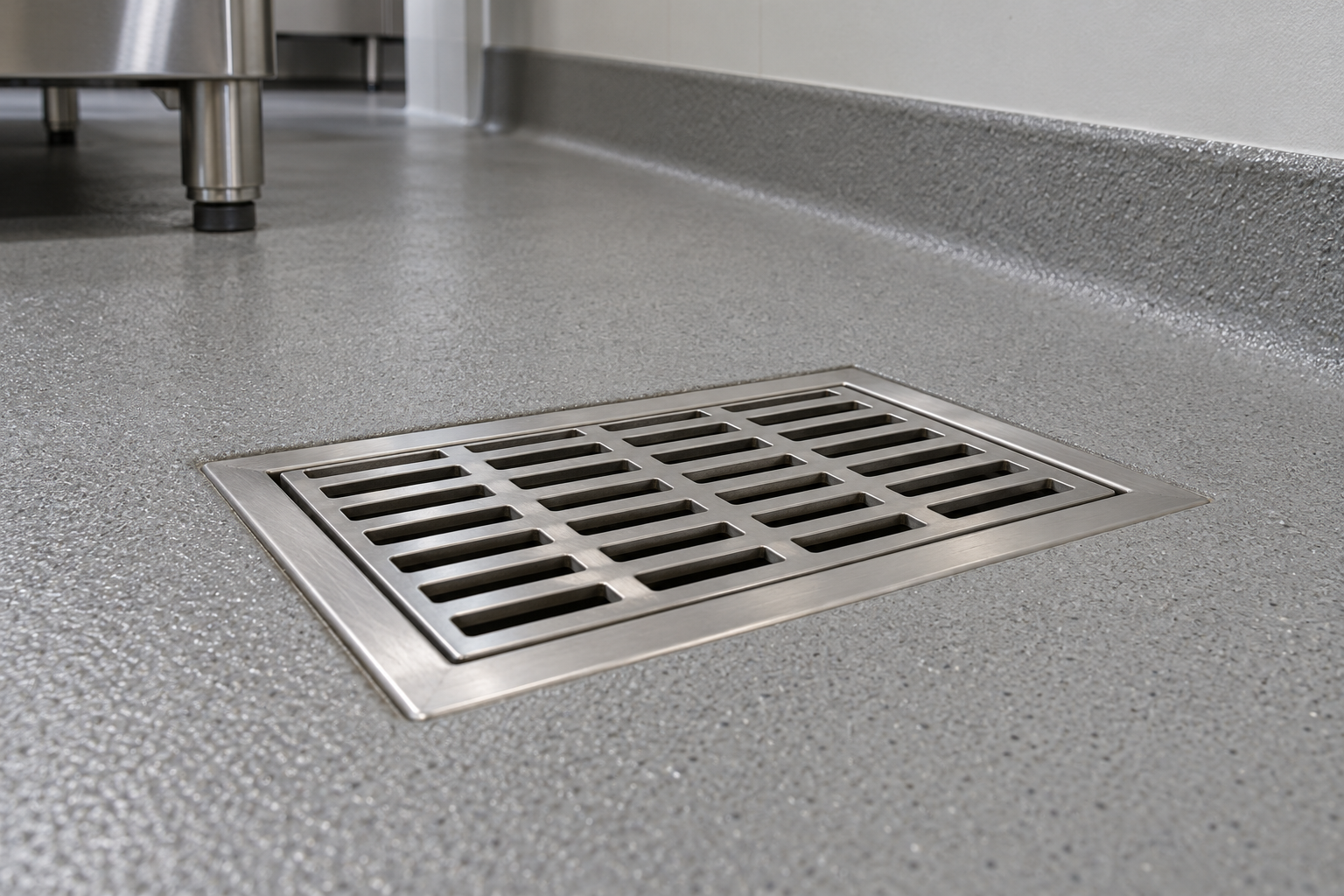
Header image: AI-generated illustration of a commercial kitchen floor and trench drain; not a photograph of a Cornerstone customer project.
A commercial kitchen floor has a different job than a showroom floor. It needs to work around cooking equipment, grease, washdowns, rolling carts and a crew moving through a busy shift.
For restaurant owners and facility managers in Mobile and Baldwin County, choosing a new floor starts with understanding those conditions. Color matters, but the more important question is: what will this floor actually face every day?
Before comparing estimates, here are the questions worth asking.
1 What heat will the floor experience
Start with the cooking line, dishwasher area and cleaning routine. Will hot liquids reach the floor? Does the kitchen use hot-water washdowns or steam? Are there repeated changes between hot and cold conditions?
Sudden temperature changes can stress a flooring system. Certain cementitious urethane systems are designed for demanding thermal exposures, but the specific system, thickness and installation details still matter. A general description such as “commercial epoxy” does not tell you whether a floor is suitable for your kitchen.
Ask the installer to explain how the proposed system matches your actual temperatures and cleaning methods. [1]
2 What grease and chemicals will it encounter
Share the names of your degreasers, sanitizers and other cleaning products. Include dilution rates, how long products remain on the floor and whether they are applied hot.
Chemical resistance depends on the substance, concentration, temperature and length of exposure. A coating described as chemical-resistant should still be checked against your cleaning program.
Also identify where grease collects and where spills are hardest to remove. Those details help determine whether different areas need different treatment. [2]
3 How much texture is appropriate
A kitchen floor needs a practical balance between traction and cleanability. A more textured finish may improve grip, but it can also require more thorough scrubbing to remove grease and soil.
Ask to see a representative texture sample. Discuss your employees’ footwear, wet areas and the equipment used to clean the floor. The goal is a finish your team can maintain consistently.
No floor makes grease or standing water harmless. Spill removal and routine cleaning remain important after installation. [3]
4 Will water actually reach the drains
Point out puddles, low areas and drains that sit above or below the surrounding floor. A new finish alone should not be assumed to correct an existing drainage problem.
Before approving the work, clarify whether the estimate includes:
- Reshaping low areas or providing slope toward drains
- Removing deteriorated material around drain edges
- Adjusting drain height or replacing drain components
- Wall-to-floor coving and transitions at doorways
- Coordination with a plumber or other trades
Get responsibilities in writing. The finished floor height, drain connection and existing slope need to work together. [2]
5 What is underneath the existing floor
Loose tile, damaged grout, old coatings and grease-contaminated concrete can affect the preparation required. Covering a surface is different from establishing that it can support a new flooring system.
Ask how the existing materials will be evaluated, what needs to be removed and how the concrete will be mechanically prepared. Cracks, joints and damaged areas also need an appropriate plan.
Discuss moisture testing and any system limitations. A moisture-tolerant product does not remove the need to understand the slab’s condition. Manufacturer instructions should guide preparation and application. [4]
6 When can the kitchen return to service
Ask for a schedule that includes removal, preparation, repairs, installation and curing. Being ready for foot traffic may come before being ready for equipment, chemicals or hot washdowns. Confirm each milestone for the selected system and site conditions. [4]
Also decide who will move and reconnect equipment, how work areas will be isolated and whether phasing is realistic. Planning those details early makes the estimate more useful than a single promised installation date.
Start with an assessment then choose the system
Cornerstone Hard Surface Restoration offers commercial resinous flooring, including urethane slurry and multi-layer epoxy options. We recommend evaluating the existing surface and operating conditions before selecting a system.
For an assessment, have these details ready:
- Location, approximate square footage and photos
- Existing flooring and known problem areas
- Heat exposure, cleaners and washdown routine
- Drain locations and areas with standing water
- Equipment-removal arrangements and available downtime
Planning a commercial kitchen flooring project in Mobile or Baldwin County? Call Cornerstone Hard Surface Restoration at (251) 232-2195 to discuss your project, or learn more about our commercial resinous flooring and concrete coatings.
Technical sources
Reviewed October 19, 2026. References support general selection guidance; the article does not specify a particular product or promise a temperature rating, cure time, compliance status or warranty.